GSCAEP Conducts Graduate Education Research Visit to the National University of Defense Technology
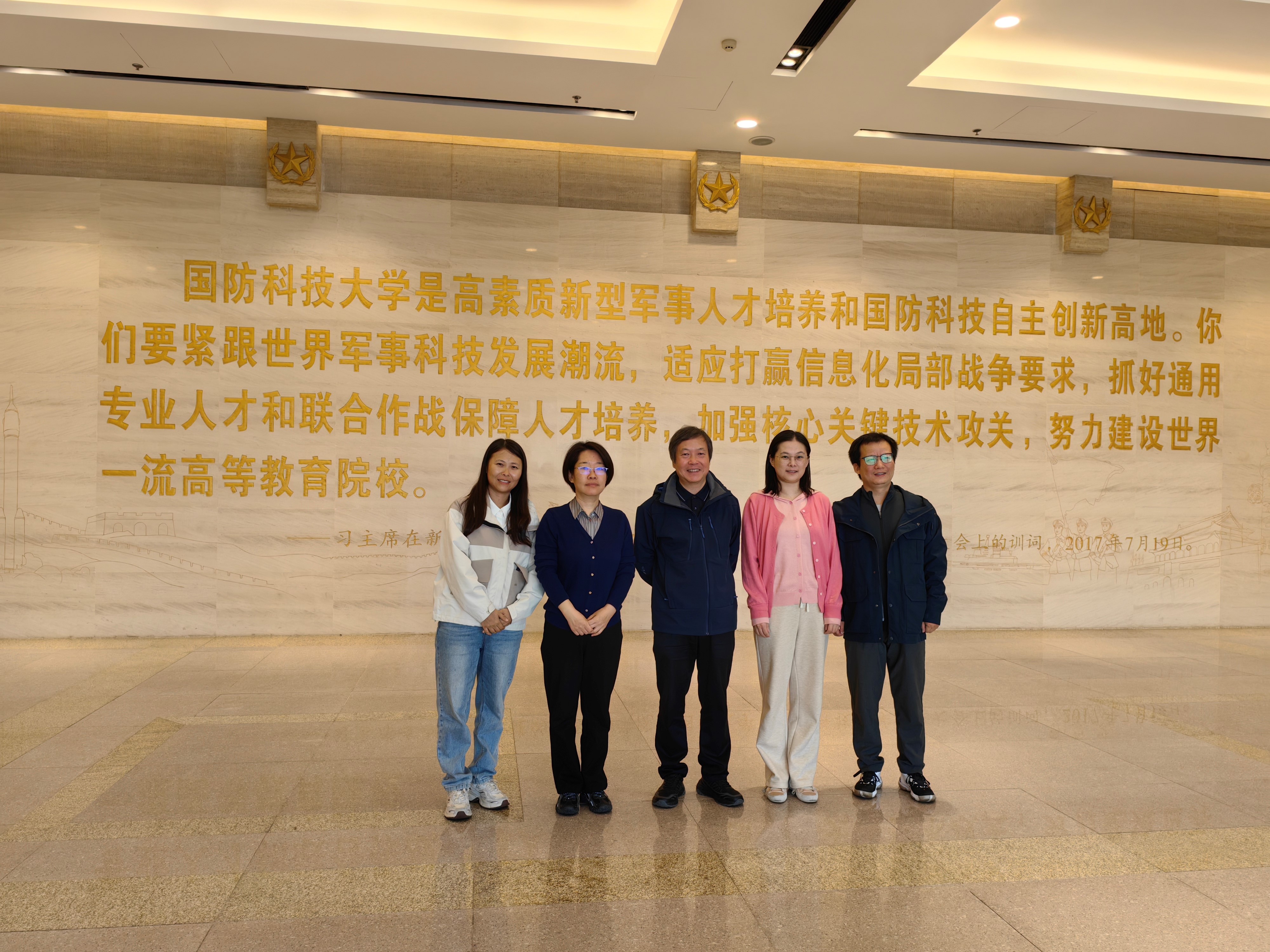
To thoroughly implement the central strategic deployment on the integrated advancement of education, science and technology, and talent development, and to align with the requirements of the Plan for Building a Powerful Nation in Education, a delegation from the Graduate School of China Academy of Engineering Physics (GSCAEP), led by Deputy Dean Libin Fu (acting in charge of administrative work), visited the National University of Defense Technology (NUDT) on November 7 to conduct a specialized research program on graduate education.
Professor Jiayu Dai, Chief Expert of the College of Science at NUDT, warmly welcomed the GSCAEP delegation. Both sides watched an introductory video about the NUDT College of Science, gaining a systematic understanding of the college’s strengths in disciplinary development, faculty construction, high-level talent training, and scientific research team building. Deputy Dean Libin Fu expressed sincere appreciation for NUDT’s thoughtful arrangements and introduced the background of the visit as well as the overall situation of GSCAEP’s graduate education.
During the discussion session, Professor Jiayu Dai shared detailed practices aligned with GSCAEP’s research outline, focusing on key areas such as the integration of national defense research projects with graduate training, dynamic adjustment of admissions quotas, quality supervision mechanisms, approaches to ideological and political guidance, and international collaboration. Teams from both institutions then conducted in-depth exchanges on challenges and key issues across various aspects of graduate education.
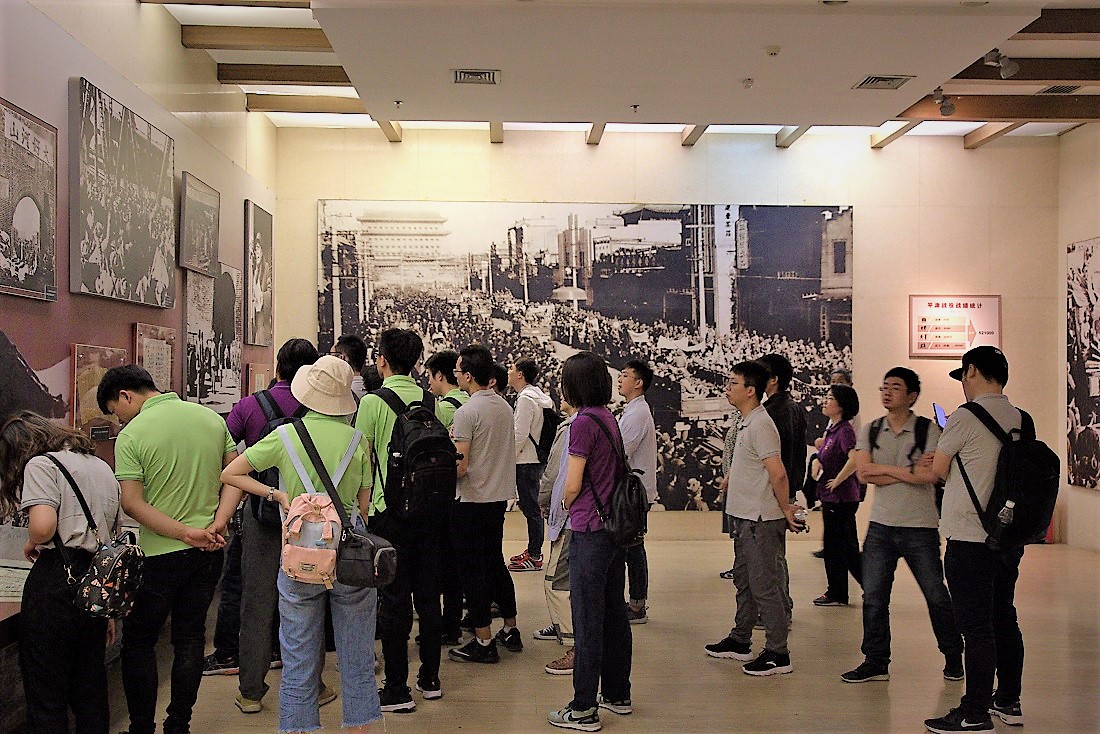
During the visit, the GSCAEP delegation also toured the NUDT History Museum, where they learned—through historical documents, artifacts, and video materials—about NUDT’s distinguished legacy in serving national strategic needs, cultivating defense science and technology talent, and advancing scientific innovation.
Through this research visit, GSCAEP gained valuable insights into the characteristic, systematic, and standardized management practices of graduate education at the NUDT College of Science. These experiences provide meaningful reference for further optimizing GSCAEP’s graduate training system and improving management effectiveness. At the same time, the visit established a foundation for regular exchanges between the two institutions and laid the groundwork for deeper cooperation in the future.
Leaders and staff members from the GSCAEP Admissions and Training Office, the Student Affairs Office (also the Party Committee Office), the Scientific Research Planning Office, and the Education–Research Collaboration Center participated in the visit.